

You can spot it the second you walk in. The art was picked from a catalog. It fills the wall, technically. It matches the couch. And it has absolutely no pulse.
I have worked with enough designers to know the difference between a project where the art was an afterthought and one where it was part of the vision from the start. The second one always wins. Every time.
Here is what designers miss about art, and what changes when you work directly with an artist instead.
Treating art as the last line item
Most projects pick art last. The room is done, the furniture is placed, and now something needs to fill that wall. So it becomes a matching exercise: find something in the right colors, in the right size, that does not clash.
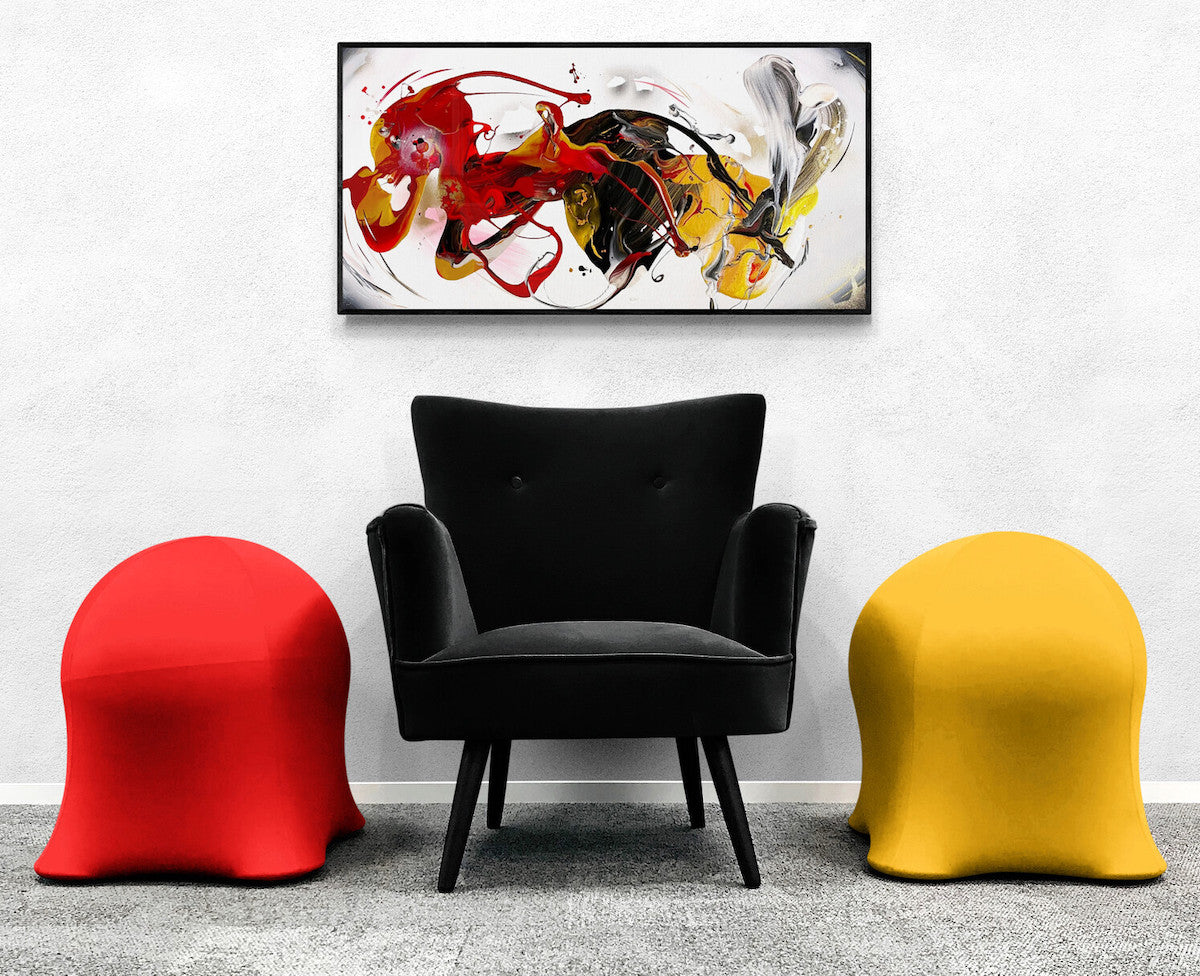
That is backwards. Art sets the emotional temperature of a room. When it is chosen last to match everything else, it ends up saying nothing. When it is part of the conversation early, the whole space gets bolder.
You do not need to buy the piece on day one. You just need to think about what the art is doing in the room before the room is finished telling you.
Buying decoration instead of a story
Catalog art is designed to be inoffensive, to work in a thousand living rooms without offending any of them. That is the job it was made for.
An original painting is the opposite. It exists in exactly one room. It has a point of view. When a guest asks "where did you get that," the answer becomes part of the story of the space, and that story makes your whole project feel intentional.
Clients notice the difference even when they cannot name it. Their guests definitely notice.
Settling for whatever sizes the catalog offers
Here is something most designers do not realize: when you work directly with an artist, you can talk size before the piece exists. Need a 48x60 to anchor that wall? A diptych for the hallway? A wide horizontal for over the credenza? The artist paints to the space.
Catalogs give you whatever sizes they decided to print. You end up designing around the art's limitations instead of the room's needs.
Paying the middleman markup
Every gallery and trade catalog takes a cut. Sometimes a big one. When you work directly with the artist, that markup disappears. The budget goes further, which means your client gets more art for the money, or better art for the same money.
Most independent artists offer trade pricing. All you have to do is ask.

Losing the revision conversation
The tone is slightly off. The client wants it warmer. The timeline shifted. When you bought from a catalog, you are emailing a rep who has to "check with the artist," if there even is one. Days pass. The project stalls.
When you work directly with the artist, you call the person holding the brush. A quick photo text, a short call, and it is handled. That direct line is worth more than any catalog's return policy.
Looking like every other designer
Here is the uncomfortable truth: if you and three competing designers all shop the same trade catalogs, your projects start to rhyme. Same sources, same looks, same safe choices.
Working directly with independent artists is how you break out of that. "Our designer works directly with artists" tells clients you care about where things come from. It tells them their home was not decorated from the same catalog as everyone else's. That is not just taste. That is your competitive edge.
Nervous about buying a painting you have only seen online?
Fair. It is a lot of money to spend on something you have only seen on a screen.
This is where working directly with the artist pays off again. Ask for video. Ask for photos in different lighting, close-ups of the texture. Most independent artists will happily do a video call and walk you through the piece while you ask whatever you need. That is not a favor. It is part of the deal when there is no gallery wall between you.
What this looks like in practice
Everything above applies to any good artist. Here is how I tend to work with designers.
We start with the space. The palette, the feeling you are after, the wall that needs anchoring. I will show you what is available that fits, or we talk commission if nothing is quite right. Trade pricing, custom sizing, sturdy canvases built here in San Diego, ready to hang. I work on your timeline, and you always hear back from me directly.
One thing most designers do not expect: when your project features my work, I talk about it. I have a community of hundreds of thousands of people across my platforms who follow what I do. Your project gets in front of real eyes.
If you are curious, here is my one-page trade sheet with pricing, sizing, and commission details. Here is what is currently available. Or just tell me about the space you are designing. Let us find the piece that makes the room.
Thank you,
Michael Carini